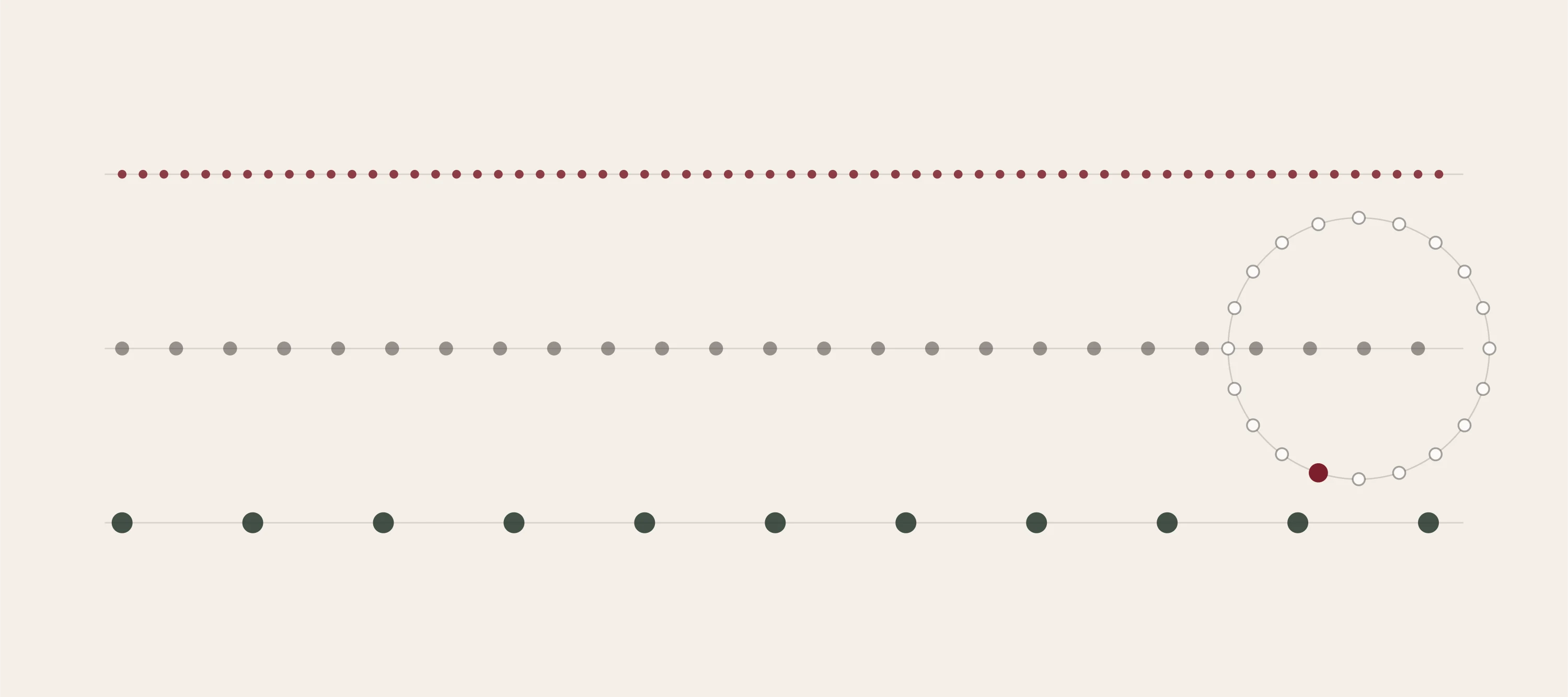
Three horizontal tracks of marks at daily, weekly and monthly spacing running across a shared field

Plans

Plans and payment rhythms

Two decisions make a chit work or fail for a household: the size of the chit, and how often you pay into it. The second one matters more than people expect, and it is the one most schemes get lazy about.

Talk about a plan

Rhythms

Choose the rhythm before the amount

Daily · from ₹85

For a shop, a stall, a workshop or any trade with takings every day. Small amounts collected often, so the instalment never has to be found in one piece at the end of the month. This is what makes a chit reachable for a household that does not save in lumps.

  • Collected against daily takings
  • The smallest entry point we run
  • Suits trades with no monthly pay date
Ask about a daily plan

Weekly

For work paid by the week, and for anybody who finds a daily collection more attention than they want. Frequent enough that the amount stays small, spaced enough that it is not an errand every evening.

  • One collection a week
  • Amounts stay manageable
  • A middle path between the other two
Ask about a weekly plan

Monthly

For salaried members, and the usual rhythm for larger chit values. One date, one instalment, aligned with the way a salary arrives — and the rhythm the worked example on the scheme page uses throughout.

  • One date a month
  • The rhythm used in our worked example
  • Usual choice for larger chit values
See the worked example

Chit value

From ₹50,000 to ₹5,00,000 — and how to place yourself in that range

  • Start from the instalment, not the pot

    It is tempting to choose the chit by the lump sum you would like to receive. Work the other way: decide the payment you are confident of making in a bad month as well as a good one, and let that decide the chit value.

  • Remember the dividend reduces it

    The instalment you pay is the stated amount less whatever dividend the month produced. Budget against the full amount, and treat the dividend as relief rather than as income you have already spent.

  • A bad month is the real test

    Every household has one — a repair, an illness, a slow season. A chit that survives your worst month is the right size; one that only works in an average month is a size too large.

  • Bigger chits are not automatically better

    A larger pot means a larger obligation for the whole term, and the auction dynamics are the same at every size. The calculator will show you the same shape of numbers whichever value you put in.

  • The term is part of the decision

    A twenty-member chit runs twenty periods. Look at where that lands in the calendar and whether the commitment sits comfortably across it — including the months you already know will be tight.

  • Ask what happens if you cannot pay

    Before joining, not after. The chit agreement sets out what default means for you and for the other members, and a company that answers that question straightforwardly is telling you something useful.

Questions

About plans and payments

Can I change rhythm partway through?

The rhythm is part of the chit you joined, so it is set for that scheme. If your circumstances change, the sensible conversation is about the current chit and about which rhythm to choose for the next one.

Is the daily payment really ₹85?

₹85 a day is the smallest daily payment our plans start from. What you pay depends on the chit value and the term of the scheme you join, and it is stated in writing before you commit.

Can I join more than one chit?

People do, usually one for a known future expense and one as ongoing saving. The caution is obvious: two instalments are two obligations, and both have to survive the same bad month.

Do larger chits have better dividends?

Not inherently. The dividend depends on the discount bid, and that is driven by how much the members want the money early — which has more to do with the group than with the size of the pot.

What is the smallest and largest you run?

Chit values from ₹50,000 to ₹5,00,000. Where you sit in that range should follow from the instalment you can sustain, which is the point of everything else on this page.

How do I know which plan is open right now?

Ask us. Which chits are forming, how many places remain, and when the first auction falls are all things we can tell you in writing, and none of them are things a website should be guessing at.

Tell us the payment you are sure of

Not the pot you would like — the amount you know you can pay in a bad month, and how often money reaches you. The plan follows from there.